
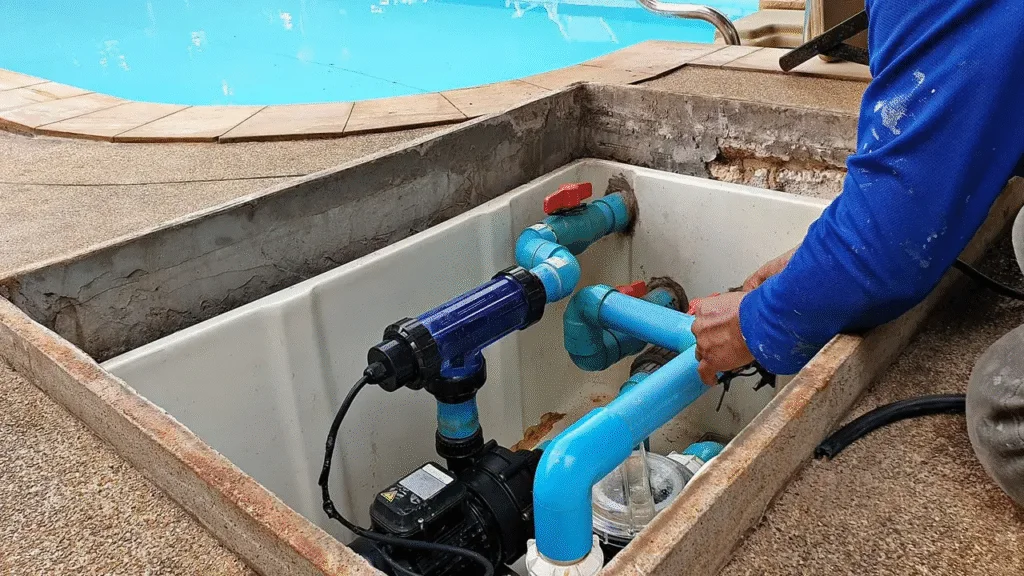
Swimming Pool pump repairs contractors in Dubai are crucial for ensuring your pool’s health and longevity. At the core of every pool is its pump, which keeps the water clean and inviting. Properly maintaining the pump ensures efficient water circulation, chemical distribution, and debris filtration. Addressing issues promptly is key to preventing unsafe or unswimmable conditions. That’s why reliable swimming pool pump repair is a necessary service, not just routine maintenance. As a provider of these services, we offer expert support and advice to help you maintain a pristine pool.
In this introduction, we’ll explore the critical importance of a fully operational pool pump, delve into the common problems that may require swift repairs, and provide a roadmap for the comprehensive insights this guide offers. Understanding the mechanics of swimming pool pump repair is the first step in ensuring your aquatic sanctuary remains a source of joy and relaxation. Whether you’re facing a minor hiccup or a significant overhaul, this guide will navigate you through the troubleshooting and repair process, ensuring your pool stays in peak condition.
Understanding the intricacies of your pool pump is essential for effective maintenance and timely swimming pool pump repair. Here’s a detailed look at the basic components, functionality, and the role of a pool pump in pool maintenance.
Basic Components of a Pool Pump
A typical pool pump comprises several key components:
- MotorThe engine that powers the pump, converting electrical energy into mechanical energy.
- ImpellerA rotating part that forces water through the pump and out to the filtration system.
- Pump BasketCatches debris before the water enters the impeller to prevent clogging.
- HousingEncases the impeller and motor, providing a pathway for water flow.
- Lid & O-RingSeals the pump basket area, preventing air and water leaks.
How It Works
The pool pump operates on a simple principle, it pulls water from the pool through the skimmer and main drain, pushes it through the filter, and then returns the clean, filtered water back into the pool. Here’s the process:
- Water IntakeWater enters the pump through the suction ports.
- Debris FilteringThe pump basket traps large debris.
- Impeller ActionThe motor spins the impeller, creating a centrifugal force that moves the water.
- Pressure and FlowWater is pushed under pressure through the filter, heater, and chlorinator before returning to the pool.
Role in Pool Maintenance
The pool pump is the cornerstone of pool maintenance, serving several critical functions:
- CirculationEnsures even distribution of chemicals and temperature.
- FiltrationWorks with the filter to remove contaminants and maintain water clarity.
- HeatingMoves water through the heater to maintain the desired temperature.
- CleaningPowers automatic pool cleaners and in-floor cleaning systems.
Regular swimming pool pump repair and maintenance are vital to keep these functions running smoothly. Without a properly working pump, water quality can deteriorate rapidly, leading to algae growth, cloudy water, and an unsafe swimming environment.
By understanding these aspects of your pool pump, you can better diagnose issues, perform routine maintenance, and know when to call in a professional for repairs. Remember, a well-maintained pool pump not only ensures a sparkling pool but also extends the life of your equipment, saving you money and hassle in the long run.
Common Pool Pump Problems
Pool pumps are the workhorses of pool systems, but they can encounter several common issues that may require attention or repairs. Here’s a rundown of typical pool pump problems:
- Noisy OperationA pool pump that’s louder than usual can indicate several issues:
- Worn BearingsThe motor’s bearings may be failing, causing a loud screeching or grinding noise.
- CavitationThis occurs when the pump is starved of water, leading to a loud, rumbling sound.
- ObstructionsDebris caught in the impeller can cause a rattling noise.
Pump Not Starting or Losing Power
- Electrical Issues:Fault in wiring, a breaker tripped, or malfunctioning capacitor.
- Overheating:The motor may shut off automatically to prevent damage if it gets too hot.
- Frozen Impeller:The impeller can get stuck due to debris or corrosion.
Low Water Flow or Pressure
- Clogged Filter:A dirty filter creates resistance in water flow.
- Air Leaks:Air entering the system through leaks can reduce suction and water flow.
- Blocked Lines:Clogged pipes or valves can impede water movement.
Leaking Pump
- Faulty Seals:Worn-out shaft seals or O-rings need replacement.
- Cracked Housing:Physical damage to the pump housing can cause leaks.
Pump Overheating
- Poor Ventilation:Lack of adequate airflow around the pump motor.
- Excessive Workload:A pump that’s too small for your pool’s volume may overheat from overworking.
These common problems, if addressed promptly, can prevent further damage and ensure your pool remains a refreshing retreat. Regular maintenance and being aware of these issues can help extend the life of your pool pump and keep your swimming pool in top condition. - Safety and toolsWhen dealing with swimming pool pump repair, safety is paramount, and having the right tools is essential for a successful and safe repair process. Here’s what you need to know:
Safety First
Turn off Power
Always disconnect the power supply before attempting any repairs to prevent electrical shock.
Dry Work Area
Ensure the area around the pump is dry to reduce the risk of slipping or electrocution.
Wear Protective Gear
Use gloves and eye protection to safeguard against sharp edges and debris.
Ventilation
If working in an enclosed space, make sure it’s well-ventilated to avoid inhaling fumes from any chemicals or solvents.
Read the Manual
Familiarize yourself with the manufacturer’s safety instructions specific to your pool pump model.
Essential Tools
Screwdrivers
A set of flathead and Phillips screwdrivers for opening the pump housing.
Wrenches
Adjustable wrenches or a set of socket wrenches for loosening and tightening bolts.
Pliers
Needle-nose and regular pliers for gripping small parts and cutting wires.
Multimeter
For testing electrical components like capacitors and motors.
Gasket Sealant
To ensure a watertight seal when replacing gaskets or O-rings.
Lubricant
Silicone-based lubricant for O-rings and seals to prevent leaks.
Shop Vacuum
To remove water and debris from the pump area before starting repairs.
Teflon Tape
For sealing threaded connections to prevent leaks.
DIY Repair tips
Here are some DIY repair tips for common swimming pool pump issues:
Noisy Operation
Tighten Loose Parts
Checking all loose screws or bolts and tighten them quickly.
Lubricate Bearings
If accessible, lubricate the motor bearings with appropriate lubricant.
Clear Debris
Inspect the impeller for debris and gently remove any obstructions.
Pump Not Starting
Check Power Supply
Ensure the pump is plugged in and the circuit breaker hasn’t tripped.
Inspect Capacitor
If the motor hums but doesn’t start, the capacitor may need replacing.
Reset Overload Protector
If the motor has overheated, let it cool down and press the reset button.
Low Water Flow
Clean Filter
Perform a backwash or clean the filter cartridges.
Check Water Level
Ensure the pool water level is high enough to allow proper pump operation.
Inspect Valves
Make sure all valves are in the correct position for optimal water flow.
Pump Overheating
Improve Ventilation
Clear any obstructions around the pump to allow for proper air circulation.
Check Pump Size
Ensure your pump is the correct size for your pool’s volume.
Leaking Pump
Replace Seals
If you notice water under the pump, inspect and replace worn seals or gaskets.
Tighten Connections
Ensure all plumbing connections are tight and sealed with Teflon tape if necessary.
When you need to call professional
Knowing when to call a professional for swimming pool pump repair is crucial to ensure the longevity and safety of your pool system. Here are some scenarios where expert assistance is recommended:
Complex Electrical Issues
If the problem involves the electrical components of the pump and you’re not experienced with electrical repairs, it’s safer to call a professional.
Persistent Problems
If you’ve attempted DIY repairs and the issue persists, a professional can diagnose and fix underlying problems that may not be apparent.
Motor Replacement
Replacing a pool pump motor can be complex and requires specific tools and knowledge.
Warranty Concerns
DIY repairs might void your warranty. Check your warranty terms and, if in doubt, use a professional service to keep it valid.
Lack of Tools or Expertise
If you don’t have the necessary tools or are unsure about any part of the repair process, it’s best to hire a professional.
Major Leaks:
Significant water leaks can indicate serious problems that might require parts replacement or a complete pump overhaul.
Professionals not only have the right tools and expertise but also understand the latest codes and standards for swimming pool pump repair. They can ensure that your repairs are done correctly, efficiently, and safely. Remember, timely professional intervention can save you time and money in the long run by preventing further damage to your pool system.
Benefits of getting professional services
Opting for professional services for swimming pool pump repair offers several benefits that can ensure the longevity and optimal performance of your pool. Here are some advantages:
- Expertise and ExperienceProfessionals bring years of experience and specialized knowledge to accurately diagnose and fix complex issues.
- Time-SavingA professional can complete repairs more quickly and efficiently, minimizing downtime for your pool.
- Quality WorkmanshipWith a professional, you can expect high-quality repairs that stand the test of time.
- SafetyProfessionals are trained to handle repairs safely, reducing the risk of injury or further damage to your pool system.
- Warranty ProtectionProfessional repairs often come with a service warranty, giving you peace of mind and protection against future issues.
- Advanced ToolsProfessionals have access to the latest tools and equipment needed for precise and effective repairs.
- ComplianceThey ensure that all repairs comply with local regulations and industry standards.
- Cost-EffectiveWhile there’s an upfront cost, professional repairs can save your money in the long run by preventing recurring problems and extending the life of your pump.
- ConvenienceHiring a professional means you don’t have to spend your time and effort on troubleshooting and repairs.